

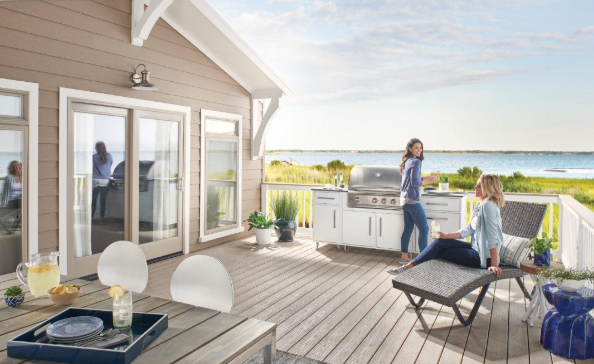
In today’s fast-paced world, few homeowners have the time or energy to give weekends to rubbing, staining, or repairing their decks. Yet, outdoor rooms are individual of the most embraced parts of a home—a place to relax, host gatherings, or simply experience nature.
The solution lies in low-support decking materials that mix durability, style, and the least maintenance. Modern progress in decking science has made it attainable to have an appealing, long-lasting deck with minimal support demands.
Low-Maintenance Decks
1. Mixed Decks
This is one of ultimate popular selections for those the one want a normal wood presentation without the upkeep. It’s from a blend of wood fibers and reused plastics, giving it substance and weather resistance.
Advantages:
- Mimics the character and color of real wood.
- Resistant to rot, splintering, and bug damage.
- Won’t dim or warp accompanying hotness changes.
- Simple cleansing—usually just soap and water.
Maintenance Tip:
Clean double a period, using a gentle cleanser and a stiff brush to erase debris and mildew. No finalizing or staining necessary.
Best for:
Homeowners who love the classic look of wood but favor depressed support and high stability.
2. PVC (Vinyl) Decking
Advantages:
- 100% water and insect opposing.
- Colorfast and fade-opposing even under strong UV rays.
- Lightweight and smooth to clean.
Best for:
Homes in humid, coastal, or moist regions are prone to moisture damage is common. You can also visit decksforlife.ca for more information.
3. Capped Composite Decks
A step above standard composite, completed decks include a securing polymer shell that entirely encases each board. This cap enhances resistance to stains, fading, and scratches—ideal for high-traffic fields.
Advantages:
- Superior stain and scratch protection.
- More color alternatives and realistic wood-piece finishes.
Best for:
Families accompanying pets or children, and homeowners, are the ones who frequently interact with nature.
4. Aluminum Decking
While less common, usually metallic decking offers unmatched endurance and minimal upkeep. It doesn’t rust, splinter, or distort, and is completely fire-opposing—ideal for areas prone to extreme weather.
Advantages:
- Long old age—often 50+ years.
- Slip-resistant and cool to the touch.
- Non-flammable, making it a safe option.
- Completely support-free other than cleansing.
Simple washing with water erases dirt and pollen. No staining, ensuring, or repainting needed.
Best for:
Modern neighborhoods or properties in severe climates seek a sleek, modern appearance.
Design and Style Options
Modern reduced-maintenance materials are not just practical—they’re fashionable too. Popular design trends involve:
-
Mixed materials:
Combining composite decks accompanying metal railings for a modern look.
-
Two-tone decks:
Using divergent colors for borders and steps.
-
Hidden fasteners:
Creating a logical, smooth surface.
-
Integrated lighting:
Adding LED deck lights for a dark ambiance.
With these customizations, homeowners can realize a personalized rustic space that reflects their beautiful while staying smooth to maintain.
Cost Considerations
Low-support decking options typically have a bigger initial cost than established wood, but the long-term costs are substantial. When equating materials, the determinant is not just installation costs but the total cost of ownership—including upkeep, replacement, and time and money.
Conclusion
A well-designed rustic deck adjoins comfort, worth, and beauty to a few homes—but it shouldn’t add to your to-do list. Low-support decking materials like composite, PVC, and aluminum provide the perfect balance of style and simplicity. They’re bosomy to withstand the pieces, oppose damage, and claim their appeal with little exertion.
For active homeowners who make use of their weekends to enjoy instead of working on them, supplying a reduced-maintenance deck method allows more time gone relax, amusing, and making memories outdoors—exactly what your outdoor range was meant for.


